The

Liver

According to Wikipedia, the emotion anger, also known as wrath, is an intense emotional state. It involves a strong, uncomfortable, and hostile response to a perceived provocation, hurt, or threat. Some view anger as an emotion that triggers part of the fight-or-flight brain response. 

Anybody can become angry — that is easy, but to be angry with the right person and to the right degree and at the right time and for the right purpose, and in the right way — that is not within everybody’s power and is not easy. Working on emotions, especially dangerous and negative emotions, can be a quick fix or a lifelong struggle. Help is always available, but talking about them is paramount. It is said that our emotions or feelings can be the guides we need to teach us about ourselves and help us choose a direction or path that will lead us to a happier and more productive life. Anger can hide other emotions that a person has no idea how to express, as they have never had any experience in doing so.

 So why do we get angry, or have any other emotion for that matter? It allows us to act on a feeling or situation that life throws at us. Anger is associated with the heart, as it beats faster, causing an increase in blood flow and the adrenal gland. So, as we saw with our paper on anxiety, kidney function will be affected. By utilizing the adrenal gland and heart, we should in theory get a surge of energy and clarity, allowing us to make the decision to fight or flee, strike our opponent or run away.

This then is a very useful impact of the emotion anger, as it should in fact help to protect us. Unfortunately, anger is not that simple, and much of the time it is actually hiding other issues suppressed beneath the surface. We often see angry people but rarely fully understand why they are in such a heightened state of emotional turmoil. Many times, people use anger because they have no other way of expressing themselves, and unfortunately, in modern society, it is not generally accepted in most spaces to show or express feelings in a productive and safe way. It can be viewed as weak or soft to show emotions, but anger seems in some strange way to be accepted. And then, even more perversely, we are prosecuted or ostracised and sometimes cast out from the clan, tribe, or society at large.

Don’t waste your time in anger, regrets, worries, and grudges. Life is too short to be unhappy.

Anger is considered to be one of the six basic emotions: disgust, fear, happiness, sadness, surprise, and anger.

Bitterness is like cancer. It eats upon the host. But anger is like fire. It burns it all clean.

Like all of the above, we all feel these emotions at some stage in our lives. It is unavoidable. It is the processing of them that becomes important, and no emotion lasts forever. Learning about or recognising any emotion—or, for the purpose of this paper, anger—we find in many instances that it is a protection for another, less basic emotion. These less basic emotions are equally valid in life and cannot be simply overlooked. But digging deep can lead to unbelievable healing.

Some of these less basic emotions may include embarrassment, loneliness, depression, or even a combination of many emotions that rise to the surface as anger.

Speak when you are angry, and you will make the best speech you will ever regret.

It is important to listen to another person and to yourself when trying to understand what may be the root cause of anger. But sometimes, people are just angry because that is simply how they are. One thing that is important is not to become defensive with others or even with ourselves. Try not to fight back or project onto another person when trying to understand anger. Listening can help immensely, so do not take it personally, and try to identify the underlying or root cause of the anger. Whatever you do, do not tell someone to calm down. Always try to understand that behind anger lies a reason.

As we have just gathered, anger is an extremely powerful and, in most cases, destructive emotion. On one hand, it needs to be released in a positive yet calm way, or chances are that when you do release it, you will blow your top. On the other hand, if you are constantly angry, people will more than likely avoid you.

When angry, count to four. When very angry, swear.

It is thought that emotional intelligence, or EQ, is the ability to recognise, understand and deal with emotions. It is an important step in personal development and growth. To recognise an emotion and then take relevant action is a sign of maturity that we should all strive for. Unfortunately, in many cases, EQ is learned through mistakes and experience, which I guess is part of growth. But it is the lesson learned that is important, and it helps you mature and hopefully teaches you to share and educate others on their own journey in life. And remember that knowledge is only powerful when it is applied properly. So help, educate and inspire.

Choose your battles as peace is sometimes more important than victory!

How can you learn to become more balanced around or with an emotion like anger?
To be honest, life never fails to throw things at us that can make our blood boil and evoke a response of anger. In some cases, anger may be the correct response—let us not forget this. It may bring resolution to a problem that you can no longer tolerate. However, lashing out or overreacting may cause more problems than the situation requires. Whether someone is being disrespectful, looking for physical conflict, or just constantly pushing your buttons, try some of the following:

Number icon 01

If possible, try to avoid the situation, and if you cannot, try to gain an understanding of the background or history of the problem that arises, to whatever extent that is actually possible.

Try to get a broader context of the situation. Try to understand—although in the moment this might be very difficult—that there is always more than one side to an argument, disagreement, or conflict. It is said that the truth lies somewhere between your side, their side, and just off-center.

Try to move forward. It is generally unacceptable to strike out or verbally abuse someone, no matter how angry they have made you, as this will rarely change their behavior. You have to remember your reputation and your place in society too. So first, consider talking it through or getting a mediator. Practice control and level-headedness where you can, though I admit this is not always possible in the heat of the moment. (Try meditation.)

Control your anger. While it may, from time to time, be helpful and put to good use, anger is generally very destructive, so taking steps to control it becomes increasingly important.

∞ Try walking away from situations or people that induce an angry response in you—just get up and leave.

∞ Try to step outside the situation and take a deep, deep breath,or ten! If you know a set of circumstances is likely to make you angry, consider developing a mantra for when the going gets tough: “Relax and let it go,” “Chill and breathe,” or something similar.

∞ Leave the situation and immerse yourself in something you love.

∞Try exercise. We should all be exercising, but in heightened moments of anger it is a great source of relief, helping the mind, body, and emotional state to relax and calm down.

Remember releasing anger needs to be beneficial to you firstly, and secondly to your surroundings. 

Anger is an acid that can do more harm to the vessel in which it is stored than to anything on which it is poured.

Foods for anger

 Let’s look at foods that can trigger anger:
Foods should be used to bring health and balance to us, but unfortunately, we no longer eat a diet made up of complete and wholesome foods. Instead, we resort to a lot of food like products. These are foods that have been stripped of all nutrients and are, in fact, very detrimental to our mental, emotional, and physical wellbeing, not to mention our spiritual health, which has truly been lost along the way.
This, I believe, is a core issue in our problems around emotional intelligence. We have lost contact with ourselves and with a higher power, and therefore find it difficult to process life and the trials it brings. As a result, emotions boil to the surface, and we do not fully know how to deal with them. This is made worse by the energy deficient foods we eat. Food provides energy, and we are energy, so does it not make sense to eat foods that are full of vitality and life? Eating foods that have had all energy and vitality removed will undoubtedly lead to emotional imbalance. Anger is one of the top six basic emotions.
If we feed ourselves rubbish, we will become rubbish in an emotional, mental, spiritual, and physical sense.

Let today be the day you stop being haunted by the ghosts of yesterday.
Holding onto anger, resentment, or grudges only poisons the soul. It keeps us stuck in the past and robs us of peace in the present.

If you want to get even, do it with those who have helped you—not with those who have hurt you. Forget the ones who caused you pain. Repay kindness with kindness, and let that be your legacy.

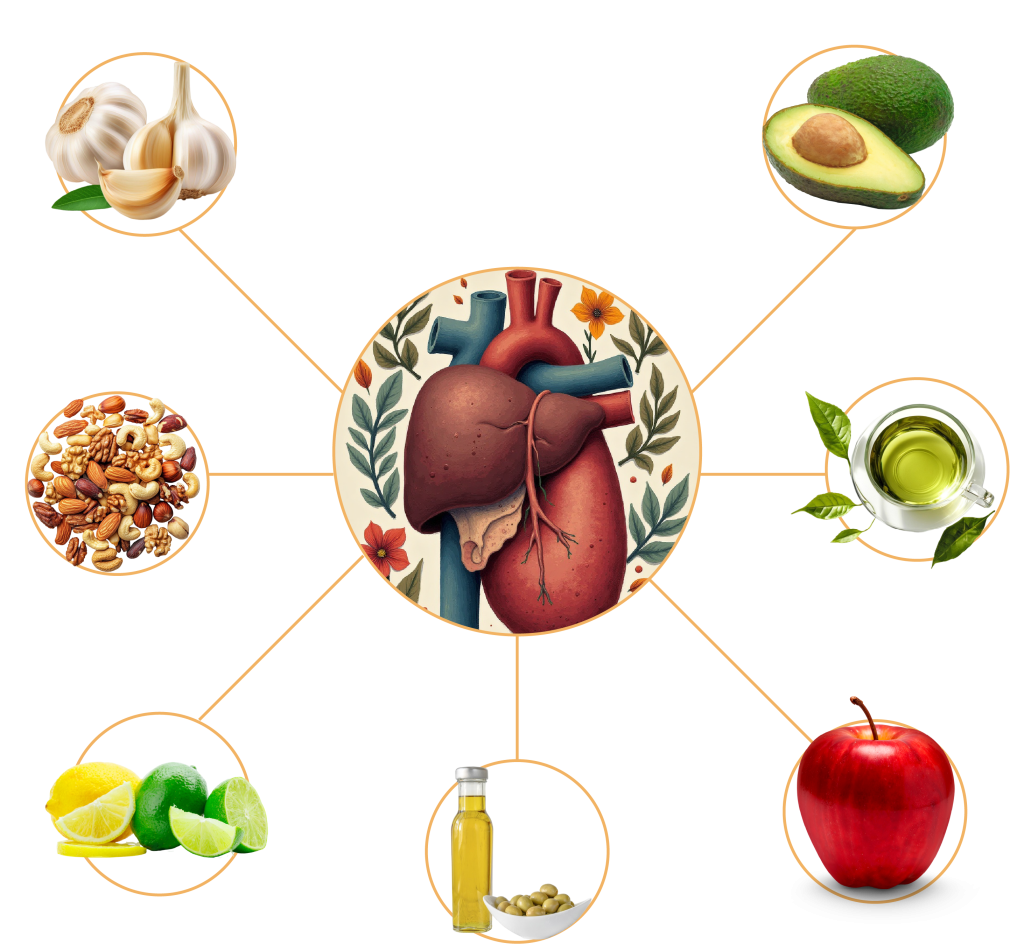
Food that are good for the liver infographic image

Foods that can give rise to anger include:

Anger, from an emotional perspective, is housed in the liver, and more or less everything we put into our bodies finds its way to and through it. All toxins, all drugs, and all the nastiness of our modern world end up in the liver. So firstly, is it really that surprising, considering how poor our present day diet is, that anger seems to be on the rise? And secondly, given that nearly all external sources of information, from news and newspapers to social media, focus mainly on the bad and the negative, our poor liver hardly stands a chance, and anger increases.
For the purpose of this paper, we will try not to digress into a lengthy discussion about social or moral standards as they currently stand around the world. All one really has to say is “Kardashian,” and the argument tends to come to an end.

Remember, nearly all foods we consume pass through the house of anger, the liver, so first and foremost, nutrient deficient, toxic, preservative filled, chemically enhanced, and artificially coloured foods are immediate red flags.

Dairy Products
Dairy, in all its forms, can cause multiple problems in the body. Firstly, it can be a very mucus-forming food. Mucus causes blockage or stagnation, and this blockage or stagnation of energy flow in the body can lead to frustration, irritability, and in turn, anger. Not to mention that simply being unwell or full of mucus does not make a person feel happy to begin with. Commercial dairy is often pumped with all kinds of hormones, antibiotics, and artificial feeds, which can then make their way into the human host, causing a multitude of conditions. These conditions lead to a general feeling of malaise and stuck energy, which can result in brain fog and, without doubt, negative emotions such as anger.
Your poor liver.

∞ Refined Flours and Sugars
This really comes as no surprise. These foods are now widely recognised by an increasing number of educated people as bad for health. Even our governments have implemented a sugar tax on products. So it is no surprise to find them high on any list of harmful foods. Refined flours have zero nutritional benefit and cause a huge amount of harm to our digestive tract. If you believe that this is where we hold our sense of self-worth, then any food that attacks our belief, value, or understanding of self can only give rise to issues of self-worth and, naturally, anger, as we struggle to accept life and what it offers us.

Sugar is associated with the pancreas, so excessive consumption can, on an emotional level, represent a lack of sweetness from within, causing us to seek it externally. This leads to massive imbalances in self-love and further issues with anger, anxiety, and self-worth. Unfortunately, this becomes an ever-decreasing circle if the pattern is not recognised. The more we dislike ourselves, the more sweetness we seek externally, causing a range of health problems—weight gain, diabetes, lack of energy, and lack of enthusiasm—leading to more issues with anger, both at ourselves and at the world around us.

∞ Processed Foods
Processed foods have little or no nutrient content. They do not belong on our plates. They are not real food; they masquerade as food, but they are not. They come with bright, proud labels claiming to be fortified with vitamins, minerals, and other supposedly healthy additions. But please read this as added chemicals.

We should not consume synthesised chemicals. They are not good for us and certainly not meant for human consumption. In addition to having no nutrients, processed foods are full of salt (which dehydrates us), artificial sweeteners, preservatives, and a variety of additives used to extend shelf life, improve appearance, or enhance texture. These are all best avoided.

It is not difficult to understand that these foods disrupt our emotional well-being and stir up destructive emotions. Anger stems from poor nourishment and the body “fighting” against the poor food choices we make.
Your poor liver.
Anger, resentment, and jealousy do not change the heart of others — they only change yours.

∞ Heavy Foods
Heavy food can cause brain fog, leaving us feeling sluggish and slow. This lack of appetite for life leads to emotional imbalance and issues such as being frustrated or angry with oneself. Being human, we often project these emotions outward onto others. If you do choose to eat heavy foods, do so in serious moderation or at times when you are unlikely to be in emotionally triggering environments.

∞ Tomatoes
Believe it or not, tomatoes can contribute to anger. In Ayurveda, it is recommended that if anger is an ongoing issue, one should avoid foods that increase internal heat. Tomatoes can cause or contribute to acidity in the body for some people, which can lead to painful and debilitating conditions like gout and arthritis. Pain is unpleasant and can cause people to lash out in anger.

Other foods that increase acidity include red meat, red wine, dairy (see above), and excess caffeine. If you have been feeling angry or frustrated lately, Ayurveda recommends eliminating foods that cause heat. While people often blame chili, the evidence is mixed. The fact that chili is spicy does not necessarily mean it increases internal heat. But if you tend to get “hot under the collar” after eating chili, it might be best to avoid it.

Though anecdotal evidence links chili to ulcers, it is not recommended if ulcers are present. Ulcers themselves could be viewed as small expressions of internalised anger, so foods that contribute to their formation should be avoided. Capsaicin, the chemical that makes chili hot, may also trigger the release of endorphins, which can actually elevate mood rather than provoke anger.

∞ Greasy Foods
Another unsurprising item on the list. Greasy foods place a heavy burden on the liver, especially when cooked in vegetable oils that turn into trans fats. While greasy food consumption may be declining as awareness grows, they still contribute to issues like fatty liver (similar to effects of alcohol), high bad cholesterol, and high blood pressure. Reducing or eliminating foods that affect liver health can help reduce anger.

∞ Dried Fruits and Chips Can Cause Anxiety
Dried fruit is extremely high in sugar, bringing us back to the issue of external sweetness. Seeking sweetness from outside sources will never truly satisfy and will only increase the craving for sugar. This time, the burden falls on the pancreas.

The emotion associated with the pancreas is worry, and excessive worry can easily erupt into anger. Chips, on the other hand, are fried foods gone bad—seasoned with every imaginable form of artificial flavouring. The range of chemical flavours in chips has reached a new level, and not in a good way. Are they worse than candy? Possibly. If not, they are certainly just as bad.

∞ Cigarettes
Cigarettes can also lead to anger because of the pressure they place on the liver. But if you choose to smoke, anger is likely the least of your concerns.

∞ Alcohol
Alcohol obviously affects the liver profoundly. But life must also be lived, so moderation is key.

Eat more foods that energise you—light, wholesome, real foods that do not rely on flashy TV ads or long ingredient lists. Choose foods that nourish the body and mind, and let your emotional health follow.

Anger… it’s a paralyzing emotion… you can’t get anything done.
People sort of think it’s an interesting, passionate, and igniting feeling — I don’t think it’s any of that — it’s helpless… it’s the absence of control — and I need all of my skills, all of the control, all of my powers… and anger doesn’t provide any of that — I have no use for it whatsoever.

With the above list, some of the foods can be taken in moderation, like tomatoes, coffee, and red meat, and some should be eliminated completely. We need to live and enjoy ourselves, so eat in moderation, but listen to your body and notice if certain foods create anger or other emotional imbalances — then avoid them as much as possible.

Never respond to an angry person with a fiery comeback, even if he deserves it. Do not allow his anger to become your anger.

Foods that help with controlling anger

Anger is connected to nutrition, and there is growing research showing that what we eat has a direct effect on how we feel. This should not require extensive studies or large sums of money — to me, it is obvious. A study at the University of California found that a diet high in trans fatty acids was directly linked to an increase in aggression. It explained that trans fats interfere with the brain’s ability to produce and use Omega 3 fatty acids, which are known to help reduce aggression. In many studies, a deficiency in Omega 3 has also been associated with depression, which may lead to increased anger and frustration.

Hangry is a word used to describe being angry while hungry — and it says it all. Most of us have experienced that feeling.

Usually, when people are sad, they do nothing. They simply cry over their condition. But when they get angry, they often bring about change.

Foods to eat that control anger includes:

Berries
All types are high in Vitamin C and antioxidants, which help manage cortisol, the hormone released during times of stress.

∞ Beans
Black beans, lentils, and lima beans are rich sources of magnesium, which is essential for calmness and the ability to relax.

∞ Dark Chocolate
Apart from being a comfort food — and many people report that the taste alone can produce a near euphoric state — this superfood has remarkable effects on mood and should never be underestimated.

∞ Fish
Especially oily fish, which are high in Omega 3.

∞ Herbal Teas
Many herbal teas, such as chamomile, have calming properties. Black, green, white, and red (rooibos) teas are also rich in antioxidants.

∞ Leafy Greens
Greens are packed with mood supporting magnesium.

∞ Whole Fruits
Apples, bananas, and oranges are full of fibre and Vitamin C.

While a change in our relationship with food is more necessary than ever in modern society, we need to pay close attention to how we eat, not just what we eat — and also how we cook (which is another lesson altogether). However, starting somewhere is always the best step, and small, not too drastic measures can help us very quickly. See below and consider what changes you can make:

Eat a variety of colourful foods, especially fruits and vegetables.

Try to remove processed foods, or at least very heavily processed foods. Choose foods that are as close to their natural form as possible.

Eat foods that support dopamine production, such as fish, eggs, chicken, and turkey.

Increase your intake of Omega 3 sources like nuts, seeds, and fish.

Get more sleep. Magnesium is important for sleep, so try to get adequate amounts through natural foods rather than relying only on supplements.

Refer to the earlier list for foods to avoid or reduce.

Spend time in the sun.

Exercise!

Generosity: the emotion that opposes anger

Generosity is the emotion that opposes anger. Is it really that generous to just give stuff that you can afford away? While I am sure that any poor unfortunate down on their luck will appreciate any help, in whatever form it comes, real generosity comes from giving a part of you no one else can. Your time. Your knowledge. Your experience. When you give this, without any thought, it is impossible to be angry. It is a true virtue to be unattached to anything material in this modern world. It is a wonderful quality to have, to give without expectation. It is even considered a virtue by many religions throughout the world.

As a quality, it is similar to unselfishness and kindness—like many other high-vibration qualities we all generally wish we had more of. Though, if we think of generosity in terms of giving what we are not attached to, then our limits of generosity should be endless.

While generosity comes in many different forms, generous people have many of the same traits. One very common thread is a willingness to give back, whether in time or money. Anyone can be generous, and everyone should be!

Generosity shares these common patterns:

How does generosity affect the body?

It releases joy. Oxytocin, a brain chemical often referred to as the love hormone, is released when giving. Oxytocin can be released in large amounts and thus encourage enjoyment and compassion!

 Spiritual growth is enhanced. If you consider the brain to work in the same way as a muscle, the more a repeated action occurs, the stronger a memory it will hold. The more you give, the more joy you will get, and so, the more you will want to give.

 The vagus nerve is one of the cranial nerves that connect the brain to the body. It has two bunches of sensory nerve cell bodies, and it connects the brainstem to the body. Hence, it allows the brain to monitor and receive information about several of the body’s functions. The vagus nerve is also known as “the care-taking organ,” and researchers have connected it to feelings of optimism, good physical health, and a higher sense of appreciation.

 The act of giving has, in many studies, been shown to help heal the body. Studies have shown that people can, in fact, cultivate compassion—basically stating that the more we give, the more our desire to give grows.

 Ok, so let’s look at the organs that are most associated with generosity.

 The Liver and the Gall Bladder. The liver is also very heavily associated with anger, of course, as stated above. So it may come as a surprise to find the emotion that opposes anger is generosity! When we feel angry, this immediately triggers the liver, and these feelings normally travel upwards to your head. This can then cause any number of symptoms—from lack of clarity, migraines, confusion, sadness, and many other strong sensations felt throughout the body.

 Firstly, let us look at the foods which are, in fact, good and bad for your liver.

Foods for the liver (generosity and anger) are then going to feed each other.

Let’s look at foods that can trigger anger and oppose generosity.

Foods should be used to bring health and balance to us, but unfortunately, we no longer eat a diet made up of complete and total foods, and resort to a lot of food-like products—that is, foods that have been stripped of all nutrients and are in fact very detrimental to our mental, emotional, and physical well-being, not to mention our spiritual health, which really has got lost along the way.

This is, I believe, a core issue with our problems around EQ. We have lost contact with ourselves and with a higher power, and hence find it hard to process life and the trials and tribulations it throws at us. So emotions boil to the surface and we do not fully know how to deal with them. This is exaggerated by the ‘energy’ deficient foods we eat. Food provides energy, and we are energy, so does it not make sense that we should eat foods that are full of vitality and energy? Eating foods that have had all energy and vitality removed will undoubtedly lead to basic emotional imbalance. Anger is one of the top six basic emotions.

If we feed ourselves rubbish, we will turn to rubbish—on an emotional, mental, spiritual, and physical level.

So foods that can decrease a basic good emotion like generosity and feelings of well-being include:

Generosity, from an emotional side of things, is housed in the liver, and more or less everything we put in our bodies finds its way to and through it. All toxins, all drugs, all the nastiness of our modern world—they all end up in the liver. So firstly, is it that big of a surprise? Considering how poor our present-day diet is, that anger seems to be on the rise? And secondly, given that nearly all external sources of information—news, papers, or social media—focus mainly on the bad and negative, again our poor liver has no hope, and anger rises. For the purpose of this paper, we shall try not to digress into much argument regarding social or lack of social standards presently displayed around the world. All one has to say really is “Kardashian” and the argument comes to a stop. Encouraging anger decreases our availability to be generous.

So foods – as above so below (see list above)

Remember, more or less all foods that we consume pass through the liver. So first and foremost, nutrient-free, toxic, preservative-laden, chemical additive, and colourant-heavy foods are immediate RED FLAGS.

A heart filled with anger has no room for love